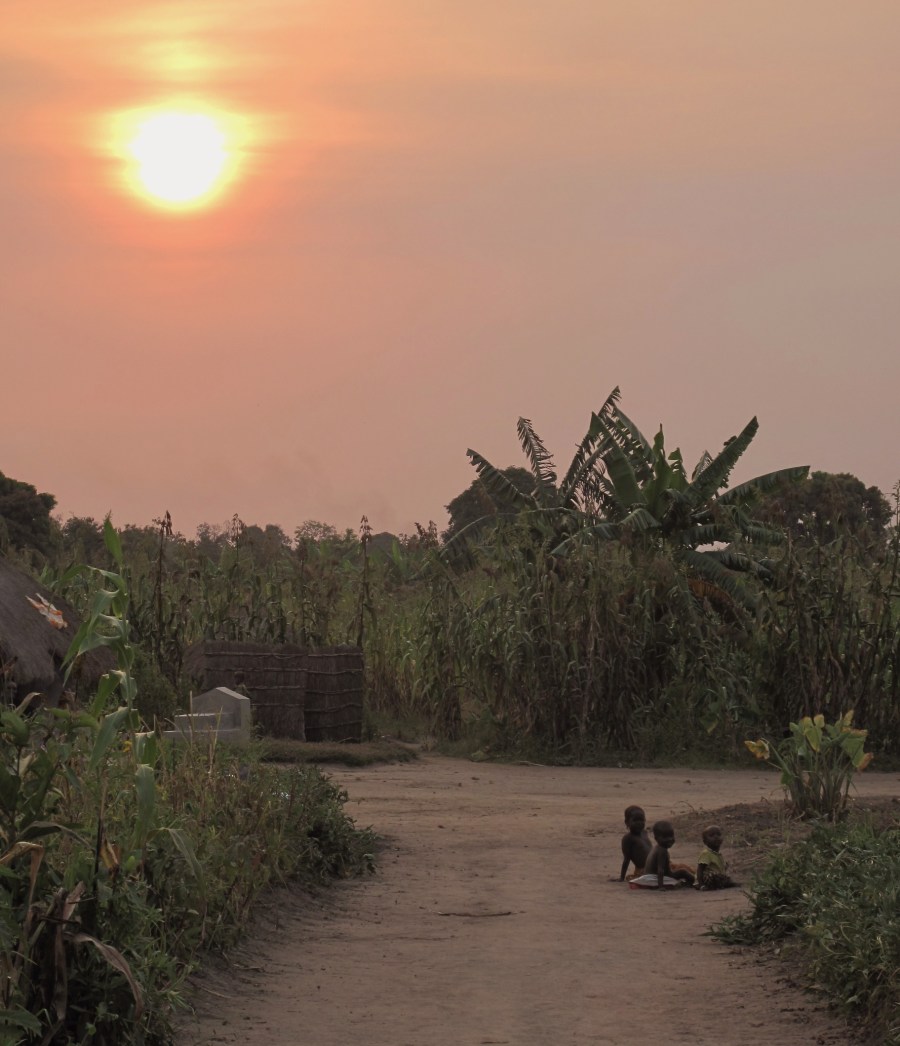
A few articles and photos from my days working in East Africa in 2010:
Southern Sudan: Archbishop’s visit supports 101 days of prayer campaign for a peaceful referendum

14 December 2010 (Yei, Southern Sudan) — German Archbishop Erwin Josef Ender paid a visit to Yei, Southern Sudan this week to show solidarity with the autonomous region, and promote peace for the upcoming referendum vote for independence.
Archbishop Ender’s visit was symbolic to the people of Southern Sudan, who repeatedly spoke of his coming as a sign that they have the support of the church in their struggle for independence.
After an over 20-year civil war between the north and the south ended in 2005, the referendum will now give Southerners the possibility to vote on whether they want to secede from the north.
To reinforce the importance of peace among the people and to deepen each person’s commitment to becoming an advocate for peace, the 101 Days of Prayer campaign was launched on September 21, the International Day of Peace, and will end on January 1st, World Day of Peace.

Solidarity through spirituality
“The purpose of 101 Days of Prayer is to help people be prayerfully ready for the referendum. They don’t want any more war,” said Kevin White SJ, coordinator of the JRS pastoral programme in Yei.
“JRS is happy to participate in this prayerful initiative for peace. Working closely with returnees, refugees and displaced people, we want to do everything we can to ensure that there be no more war, which not only includes educating people about their civic rights and responsibilities but also asking the Lord to help us in this historical moment,” said Fr. White SJ.
Every month during the 101 Days of Prayer campaign, there has been an inter-religious prayer session and a peaceful event. In addition, people have been encouraged to say the prayer for peace in Sudan daily (see below.)
The Sudanese Catholic bishops, Catholic Relief Services (CRS) and Solidarity with Southern Sudan (SSS) all teamed up to launch the campaign.
Church supports freedom of choice
During his visit, Archbishop Ender visited neighbouring churches, the JRS compound in Yei, and celebrated mass at Christ the King Cathedral. It was not his first visit to Sudan, as he lived in Khartoum as the apostolic pro-nuncio representing the Vatican from 1990-1997.
The Bishop Erkolano Lodu Tombe of Yei welcomed Archbishop Ender’s visit and stated several times that it was the Sudanese people’s right to vote for secession, but not their duty.
Referenda centres are now sprouting around the countryside and planes arrive daily in Juba from Khartoum, repatriating Southern Sudanese who were living in the north.
“Maybe this will be the last occasion to visit a united Sudan,” Archbishop Ender said. “Since I lived here something has improved, but the position of the people has not. The north didn’t do anything for the south,” Archbishop Ender said.
Article & photo by Sophie Vodvarka while working as a communications program assistant with JRS Eastern Africa. This article is from Jesuit Refugee Services Eastern Africa communications, and can be found originally printed on their website here.
Distance-learning program provides hope

7 December 2010 (Kakuma, Kenya) — Every day, Bol, a 26-year old paraplegic man, pedals his hand-powered tricycle an hour from his home in Kakuma refugee camp to attend introductory training sessions for a new distance-learning course. The new Jesuit Commons Higher Education at the Margins (JC-HEM) distance-learning accredited university courses are scheduled to begin in January.
Bol fled his home in Sudan because of ethnic conflict and political difficulties nine years ago. He first moved to Lobone, in the autonomous region of Southern Sudan. He later settled in Kakuma refugee camp, located in the desert of the Turkana region of northwestern Kenya. He first came into contact with Jesuit Refugee Service in Kakuma through its Mental Health Programme.
“I joined JRS as a student participant in basic counselling skills for two months, became a community counsellor, then I applied for this [JCHEM] course and am succeeding as a student. This is the only programme like it here,” Bol said.
“I feel very happy to be here in this programme. Life is very difficult without studies, without school it is stressful in a refugee camp. We [refugees] think, after this, where will we be? If we go to Sudan we need an education to get a job,” he continued.
This latest Jesuit initiative by JRS and Jesuit Commons – Higher Education at the Margins – seeks to offer refugees opportunities to broaden their minds and help their communities. The new distance-learning programme will offer a two-year liberal arts certificate, with course subjects including leadership, business and Jesuit values.
“I want to be a leader somewhere so I can show despite being a disabled person I can do what ‘normal’ people say they can do. I want to be a lawyer; that is my first choice. To get access to education here in Africa is hard because of fees, if it wasn’t for JRS I couldn’t do anything,” Bol explained.
Discrimination
The upcoming referendum in Southern Sudan to become fully independent from Sudan, taking place on 9 January, has been on Bol’s mind a lot. Many Sudanese are afraid it will lead to further outbreaks of violence in their country, and they have heard rumours they may be forcibly returned to Sudan from Kenya.
“There is no chance for resettlement [to a third country from] here. If you are just waiting here you are killing your life. So this year I visited Sudan and I saw the situation, it is a difficult situation. That is why I feel better here. We disabled people are the first victims [in unstable countries,]” Bol said.
“In most communities, disabled people are not respected. People think you’re not contributing to society. In the future I will be a productive person, to give services to other people and the community will use me,” he added.
In the pilot phase of the programme, ending in August 2014, more than 1,000 refugees living in three JRS sites in Kenya, Malawi and Syria are expected to participate. The organisations plan to use the internet and on-site teachers, mentors and tutors, to offer accredited certificate and diploma courses to refugees, as well as certificates of learning, known as Community Service Learning Track.
At the end of each year, the students will receive Certificates of Completion from Regis University in Denver, USA, and after three years of successful studies, they will be awarded their diplomas.
Article originally appeared on Jesuit Refugee Services Eastern Africa’s website here. Photo and article by Sophie Vodvarka while working as a communications program assistant with Jesuit Refugee Services Eastern Africa.
 Sophie Vodvarka Chicago-Based Freelance Writer