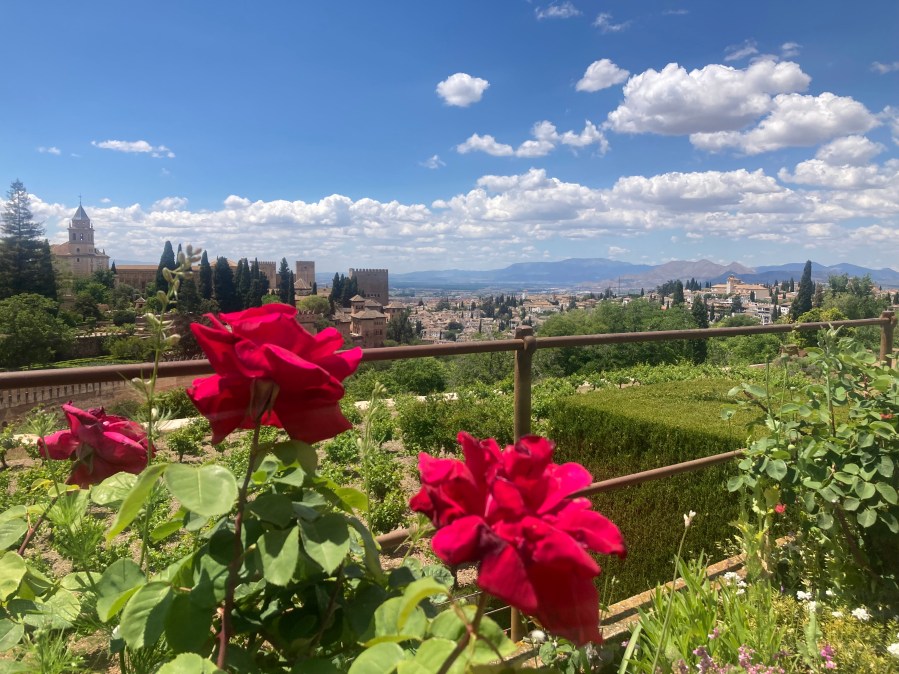

This May, Patrick and I visited his parents, who were living in Cordoba, Spain for the semester. It was a delightful trip, and our hearts were warmed with Andalusian soul food and red wine, cafe culture, and the relaxation of being in a country that prioritizes rest and beauty.
We loved our time in Spain. It had been a cold winter in Chicago as Patrick battled a frightening, mysterious (possibly autoimmune) problem with his knee and ankle that required crutches for 4 months. I was caretaker for my young husband while I was teaching a college course for the first time. Teaching at a university as a rookie was a fantastic experience, BUT it was filled with the anxiety, and brain-stretching of a first-timer, combined with emotional and physical labor of caregiving.
By April, the weariness was intense. But the hope of Spain, seeing our in-laws abroad, and Patrick walking again was fuel for both of us. Thanks to the generosity of family, a commitment to physical therapy, and some marital grace, Patrick gained his ability to walk again, and we set off for an international adventure.
We slipped into Andalusia in May, just weeks before global news filled with stories about Spaniards protesting mass tourism. Whoops. Not something I’d thought of before hopping on the plane, but it was frequently on our minds during the sun-and-olive-filled adventure. Because as we discovered, our presence as tourists was explicitly what many Spaniards said they do not want or need. Which is a rather uncomfortable reality to write about as I wax poetic about the country filling us with vitality once again.
But such is life – tenderness and tension living together.


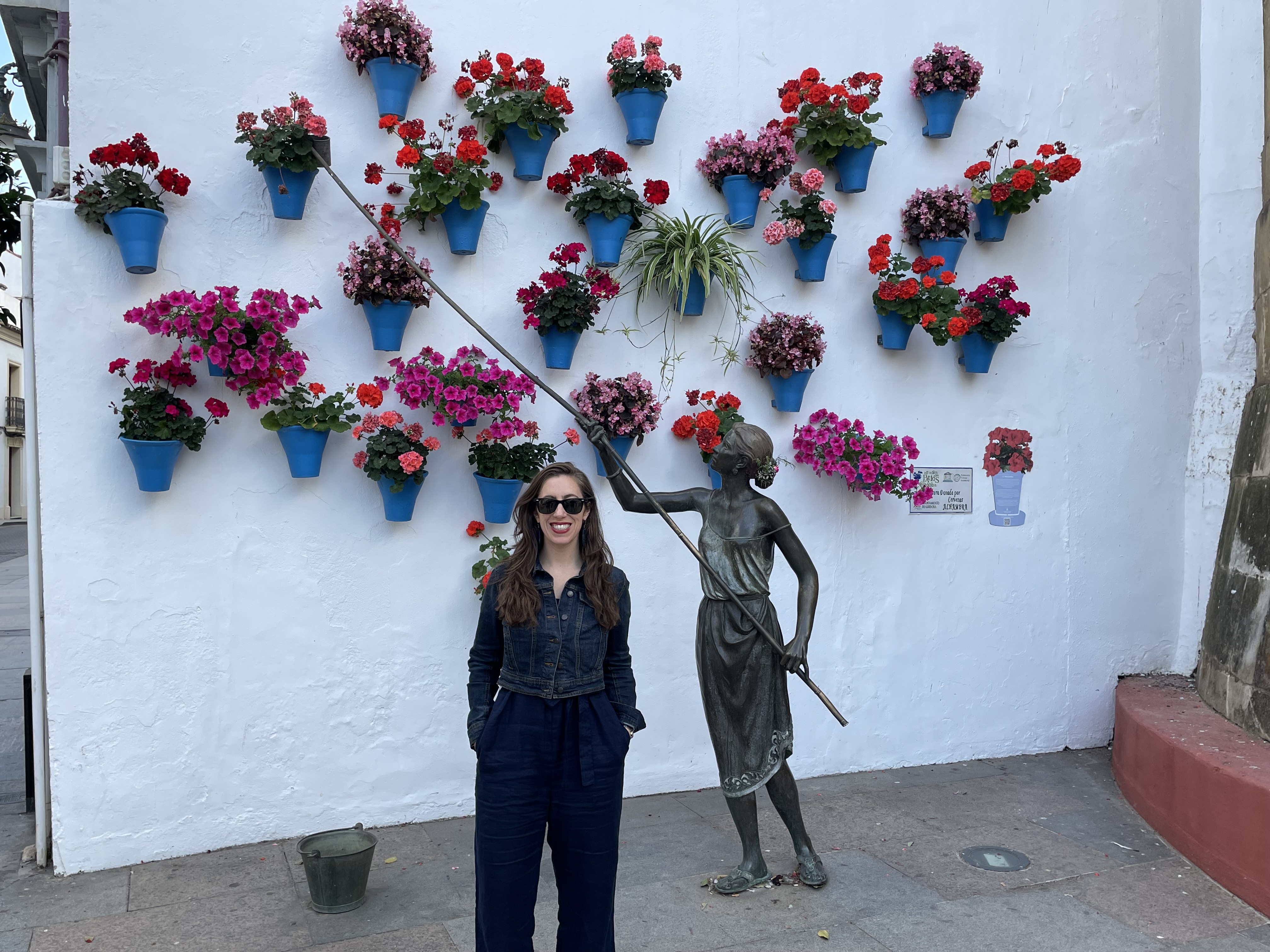
Flowery Cordoba!
Revisiting Sacromonte and the Anti-Tourism Movement of Albazin
After several sweet days staying in flowery Cordoba, we set off on a high-speed train to Granada. On our first night in Albazin – the white-washed Moorish quarter, we realized something was up. As we wandered the winding, hilly streets, I noticed signs by the neighborhood group Albayzin Habitable that read “Contra El Turismo Masivo” (Albayzin Against Mass Tourism.) The words included the symbol of a flaming pomegranate – the fruit is a symbol of Granada.
It was jarring to see a sign saying that the neighborhood was clearly not thrilled with our presence – and felt it was causing fiery destruction to the city – however, it quickly became clear why residents were concerned. Though at night, and from our porch during the day, Albazin was largely quiet and peaceful – it was a different story when we ventured out during the day. The tiny cobblestone streets were packed with cars and tourists. This type of infrastructure wasn’t built to accommodate hordes of people, and it was a stifling experience wandering in Albazin during the day. There were many tourist groups as well, and the vans that accompanied them were frequently seen blaring along the roads, which often did not have a separate sidewalk. It wasn’t safe, to say the least.
I’m sure if I lived there, I’d protest mass tourism too. Nobody wants their neighborhood to be overrun by tourists and tourist vans. And as has been written about world-wide, there are other serious issues caused by mass tourism, like the housing crisis with the increase of Air BnB, and locals’ disgust in major corporations benefiting from tourism, while locals take the hit.

But despite the country’s anti-tourism sentiment, I appreciated that we had many good experiences with locals (gracias!) Since the bread, cheese, wine, olive oil, etc. were all so amazing, we enjoyed having meals on our porch in Granada – making the most of the beautiful neighborhood. One day, I went to buy food at a local small grocery store in Albazin. It was a sweet little store, full of organic produce. At first I felt some tension with the owner, who was the only other person in the store. I was an obvious tourist. But after we greeted each other and spoke a little bit in Spanish, the energy shifted. He asked where I was from, and I complimented the store. We talked about his produce and goods. The gift of conversational Spanish!
Revisiting Sacromonte
I also felt the friendliness of the locals in Sacromonte, the neighborhood next to Albazin. Sacromonte is built on the side of a mountain. Hundreds of years ago, people literally dug into the mountain to make their homes in caves. It was a place of refuge for Spanish Gitanos, or gypsies, as well as Jews, after the Catholic monarchs took over Spain.
Sacromonte has always felt magical to me. I remember back in 2009 on my first trip to Spain, wandering the neighborhood bleary-eyed after arriving on a night train from Valencia. My 6am arrival meant I could only drop my backpack at the hostel, so I wandered the city until the afternoon – content in the energy of youth and adventure. I made my way along the riverwalk across the river from the Alhambra and wandered up the steep cobblestone road toward Sacromonte.
White-washed buildings, cave houses, and cafes flank the north side of the main road in Sacromonte. Sweeping valleys, mountains, and the incomparable fortress palace, the Alhambra, are seen on the opposite side. Sacromonte feels spacious and calm – familiar. My 21-year-old soul recognized the gentle, spectacular energy right away. Sacromonte radiates passion.

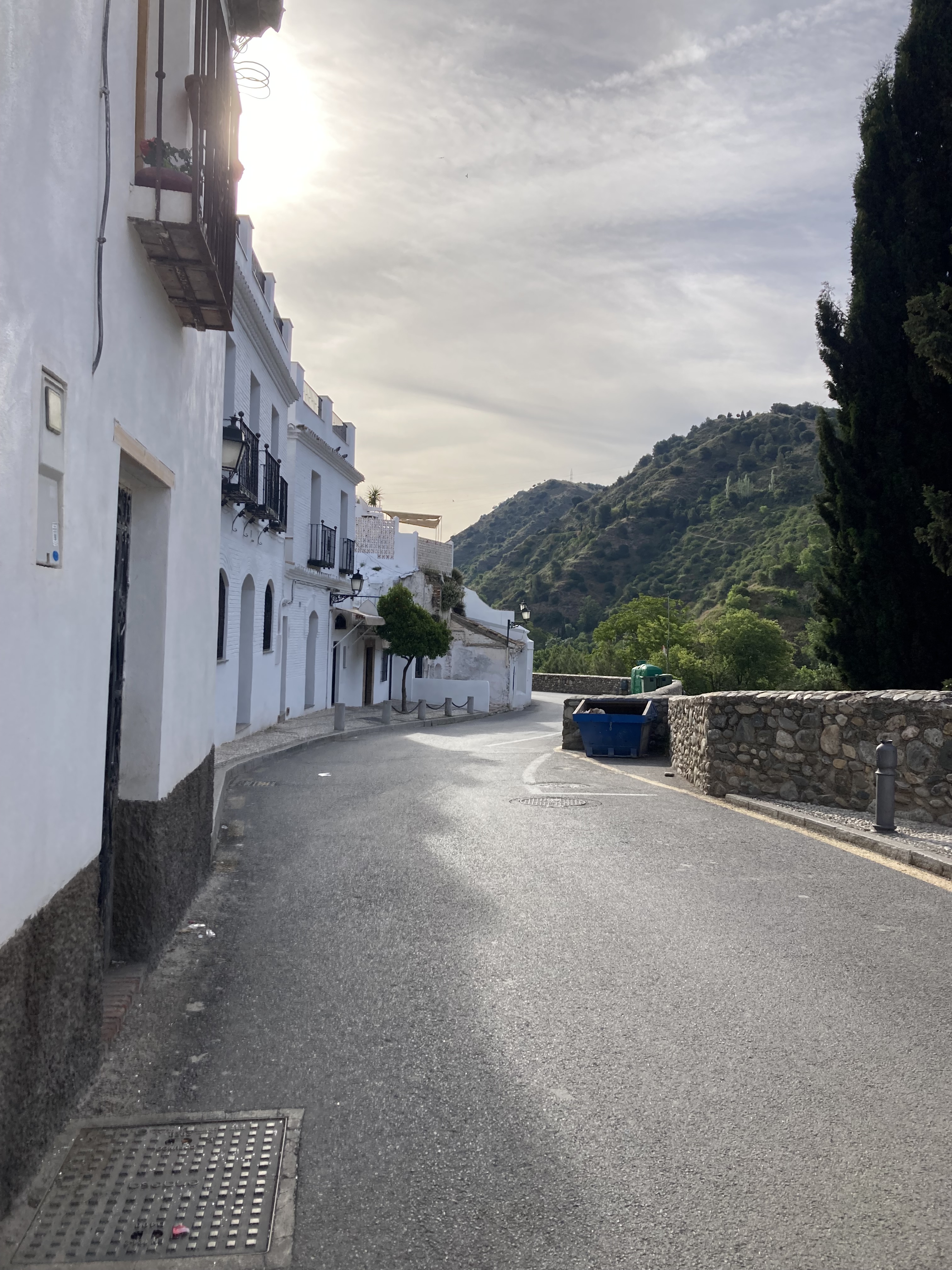
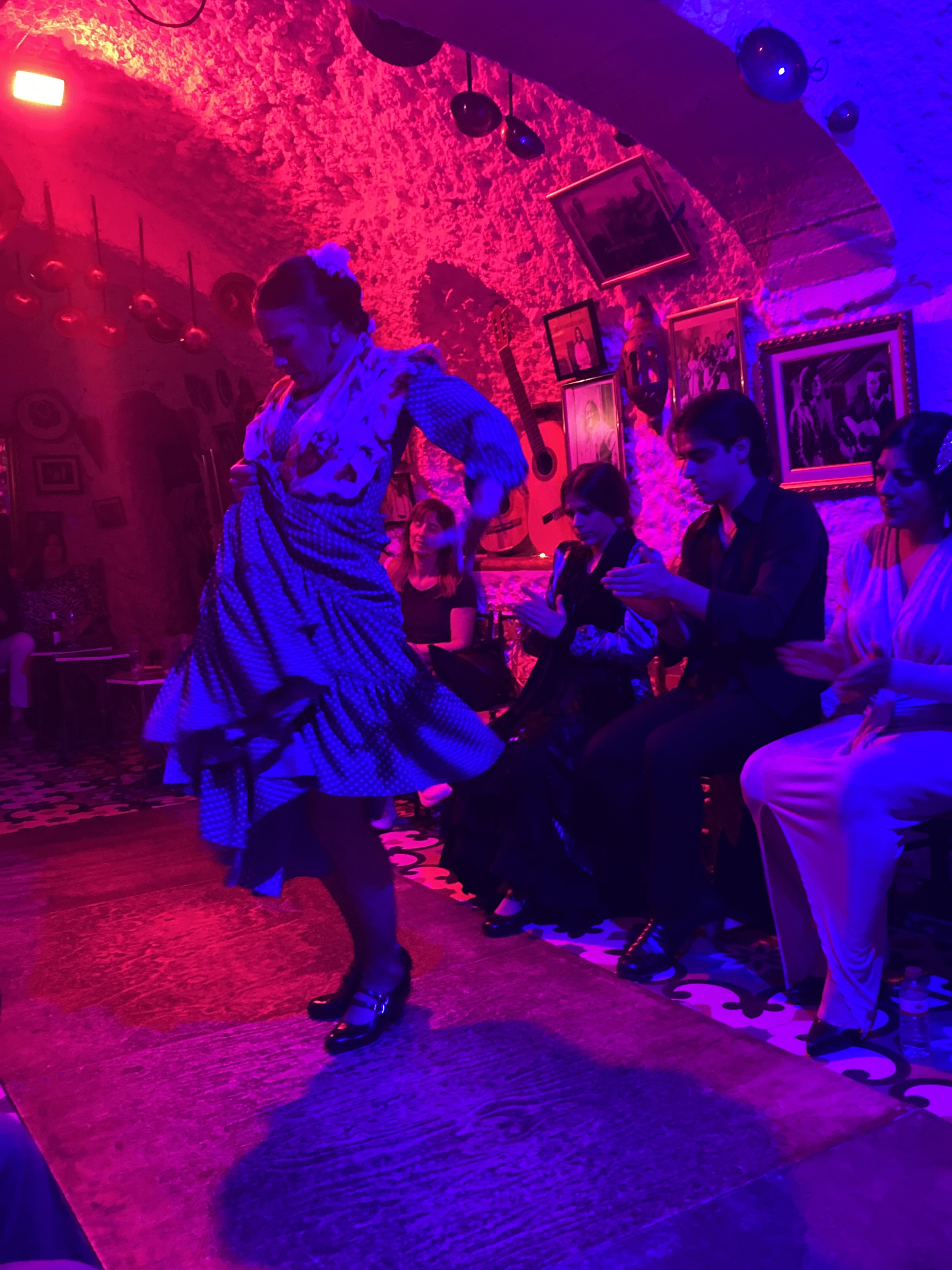
It was surreal to walk through the neighborhood once again, with my husband, who could finally walk again, this spring. One evening we went to see Flamenco in an old cave-house turned Flamenco bar in Sacromonte. Though I am a lover of Gypsy Jazz, Balkan music, and other music from Roma people, I have not listened to much Flamenco. It was an exceptional live experience, with a fusion of many different elements of Spanish culture.
The Flamenco show took place in the center of the cave. We lined the walls, smashed next to other patrons. Little tables in front of us held wine and beer. The walls were decorated with black and white photos of Gitanos and decorated with copper pots and other copper items – coppersmith was a traditional Gitano trade.
There were five performers – one guitarist, one singer and three dancers. The dancers, two women and one man, took turns leading the radiating performance with their stomping, twirling, absolutely precise steps. It was such an emotive spectacle, I wondered how the entire room wasn’t weeping.
Passionfruit, and a sleepy beach
Our visit to Spain culminated with a restful trip to Málaga – a coastal city filled with gorgeous architecture and walking streets. We enjoyed incredible Moroccan food at a restaurant decorated as extravagantly as the Alhambra, we beached hard, and we drank cocktails at a rooftop bar with my in-laws. We were also lucky to be there on a Saturday night – when the city was pulsing. Basking in the heat of the Costa Del Sol’s nightlife, Patrick and I found a little craft beer bar, where we both got to revisit our study abroad experiences in Europe. Reminiscing over Staropramen and Chouffe beer, we took in the warm night in Málaga – the entire city, of locals and tourists, seemingly out to party.

The next day we visited the local market in Málaga – I was on the hunt for fresh passionfruit. While visiting the stalls of fresh foods, I sensed that there was a bit of a strain with tourists. But we did our best to be gentle visitors. And, we savored the delicious fresh olives, chorizo, passionfruit and bread on a park bench near the coast.
We were also very excited to visit the ocean in Málaga. One day we went to the main city beach and enjoyed our over-priced sangrias with little Spanish flags that were sold to us by hawkers who walked along the sand. Patrick got a good ocean swim in, and I ventured half-way into the water before a sudden tide nearly took out a child next to me, and I decided to wait until it calmed down. But we had a great time – how could we not? It’s the sea. It’s Spain.
Then, on our last evening, we found a really special place. We decided to walk along the coast about a mile and a half away from the center, to Playa Pedregalejo. The local neighborhood has little shops and relaxed restaurants and bars along the coast. We chose one and sat down on the boardwalk, facing the sea. The sky had already become soft on the sparkling water. We ordered beer and wine, and watched the sun set on the Costa del Sol.


Americans Abroad
It is good to leave the United States. Exploring new streets, eating new foods, meeting new people and basking in the beauty of just being alive – this is what it’s all about. And, I really hope that Spain and the other countries who are suffering from over-tourism can find a good balance soon that prioritizes the entire local population. Everyone deserves to live in peace.
Travel always teaches me something – and it always places gratitude at the forefront of life. How could I not be grateful this May to be walking with my husband through the Cordoba train station, waving at my in-laws at the top of the escalators, about to begin a holiday exploring magical places like palace gardens filled with peacocks? Travel is sacred. Salud!


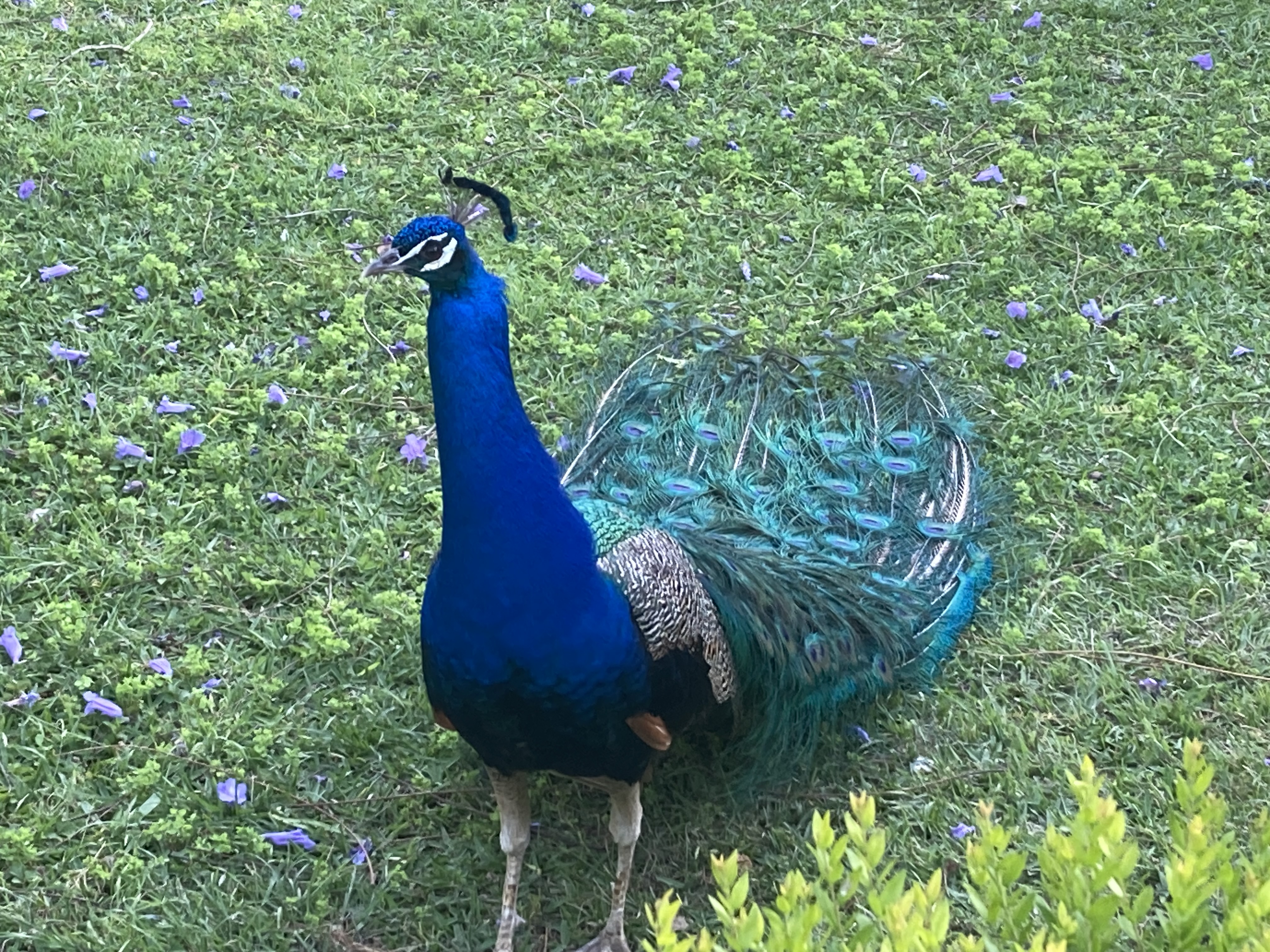
A peacock in the Alcazar gardens in Sevilla, Spain.
 Sophie Vodvarka Chicago-Based Freelance Writer